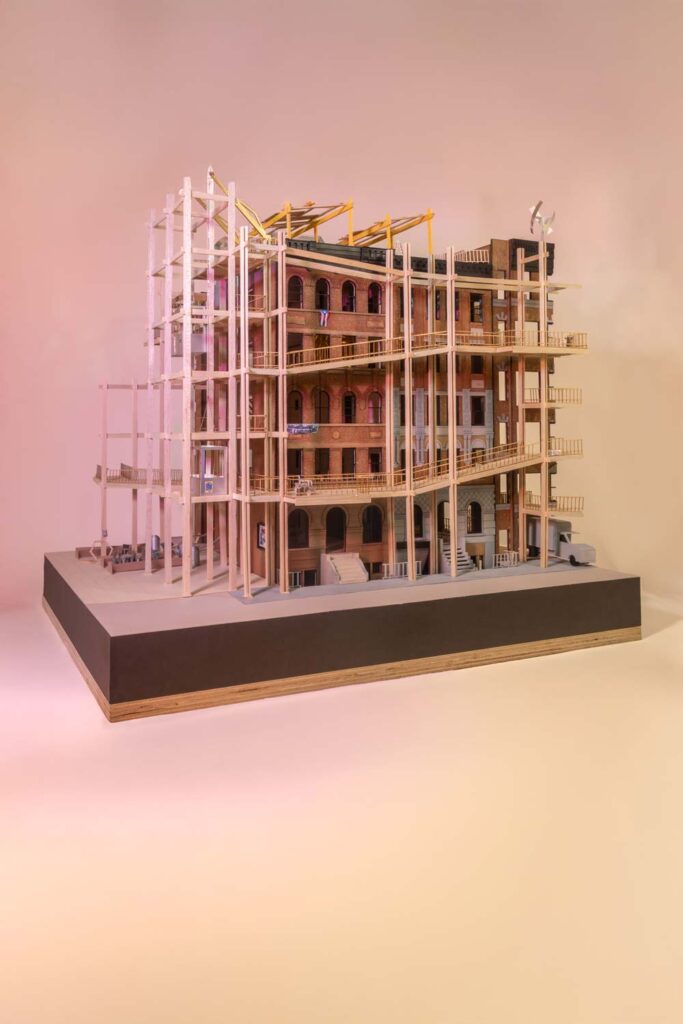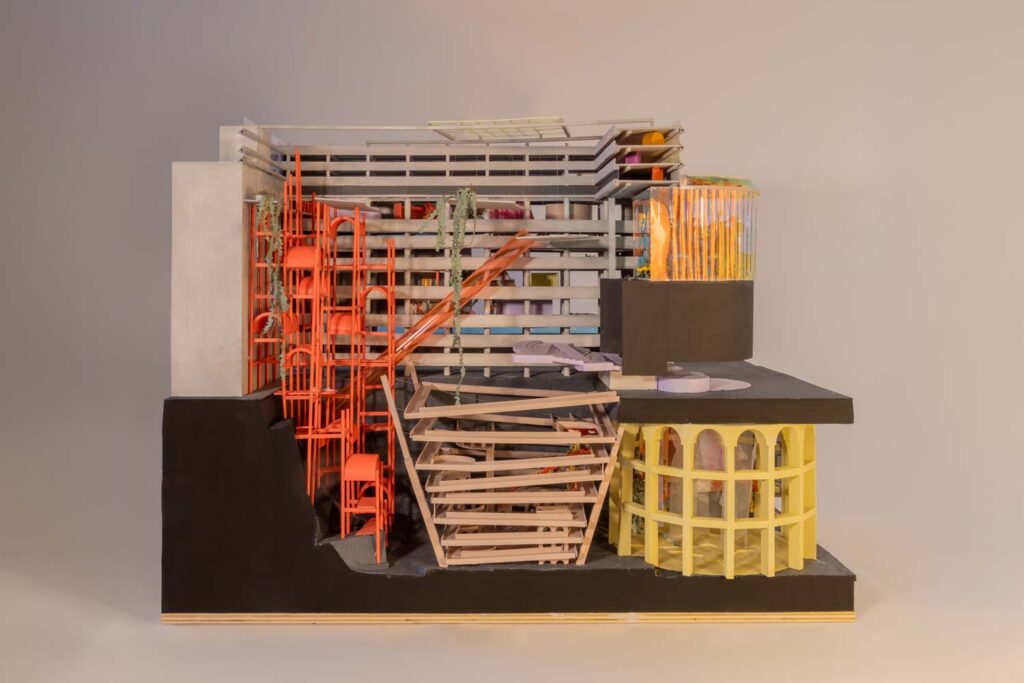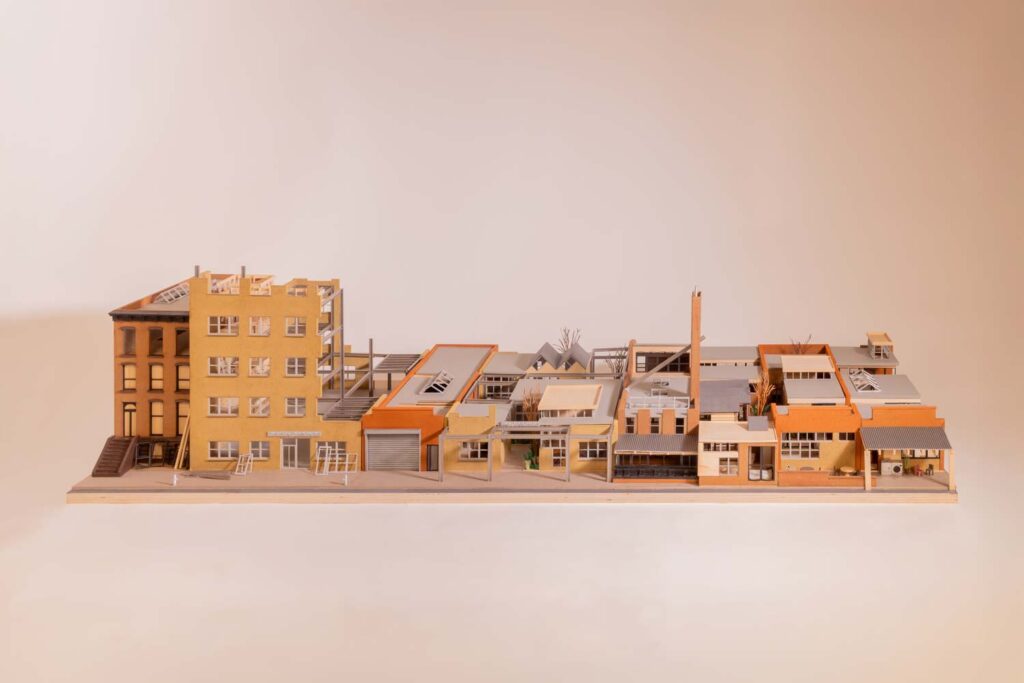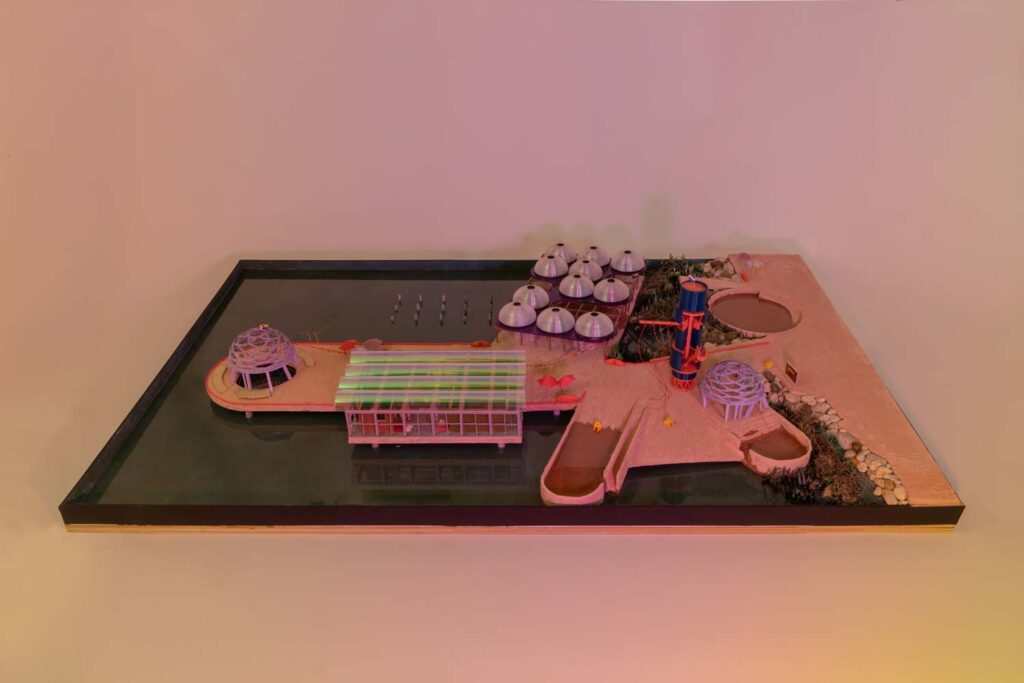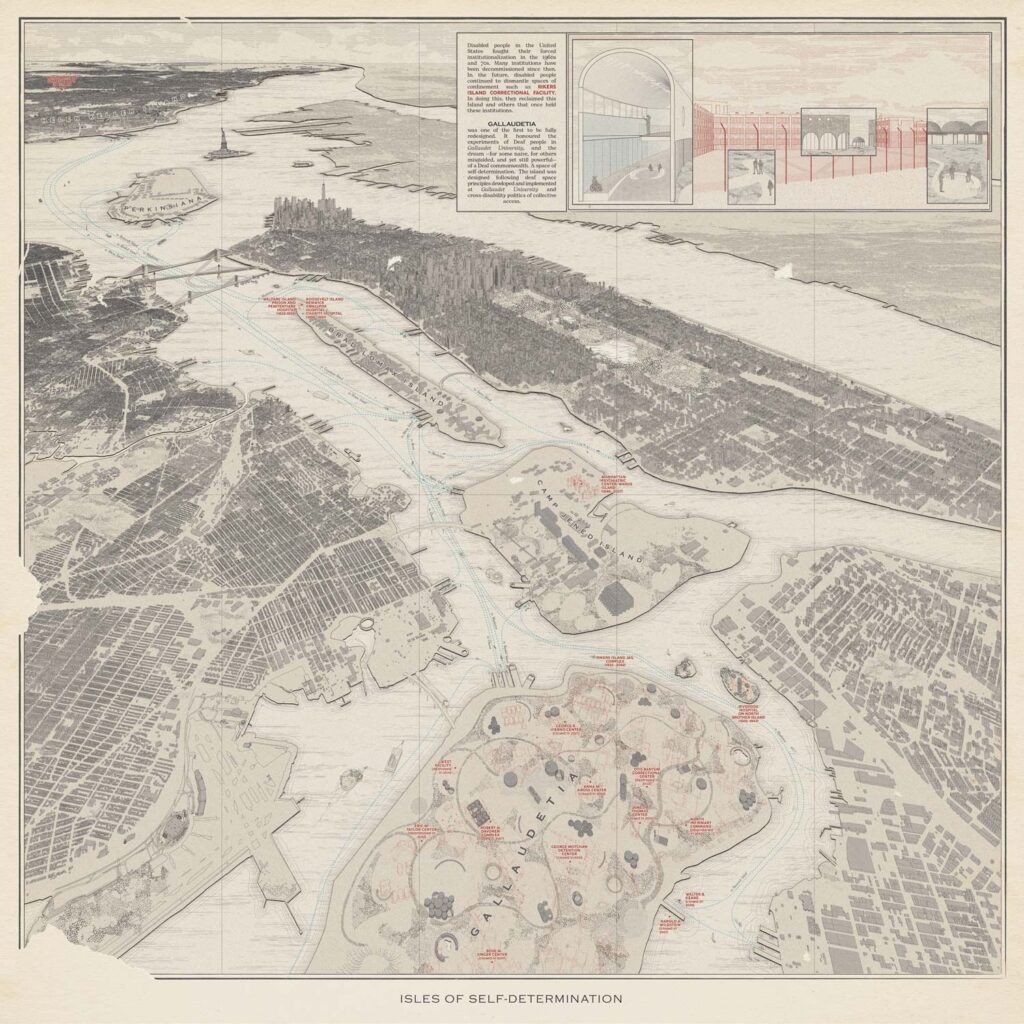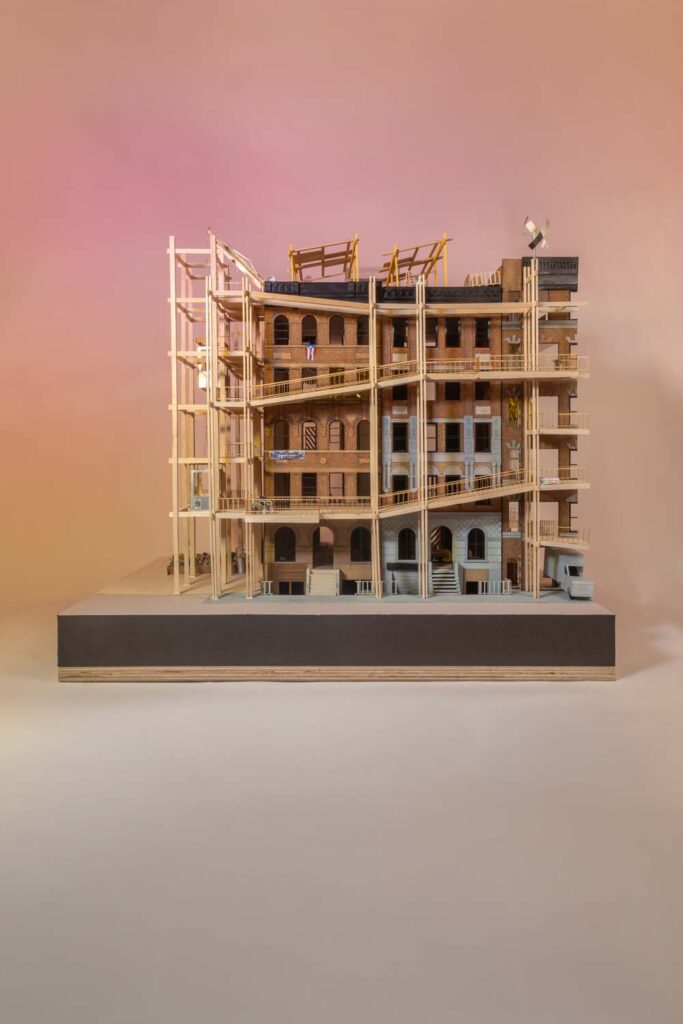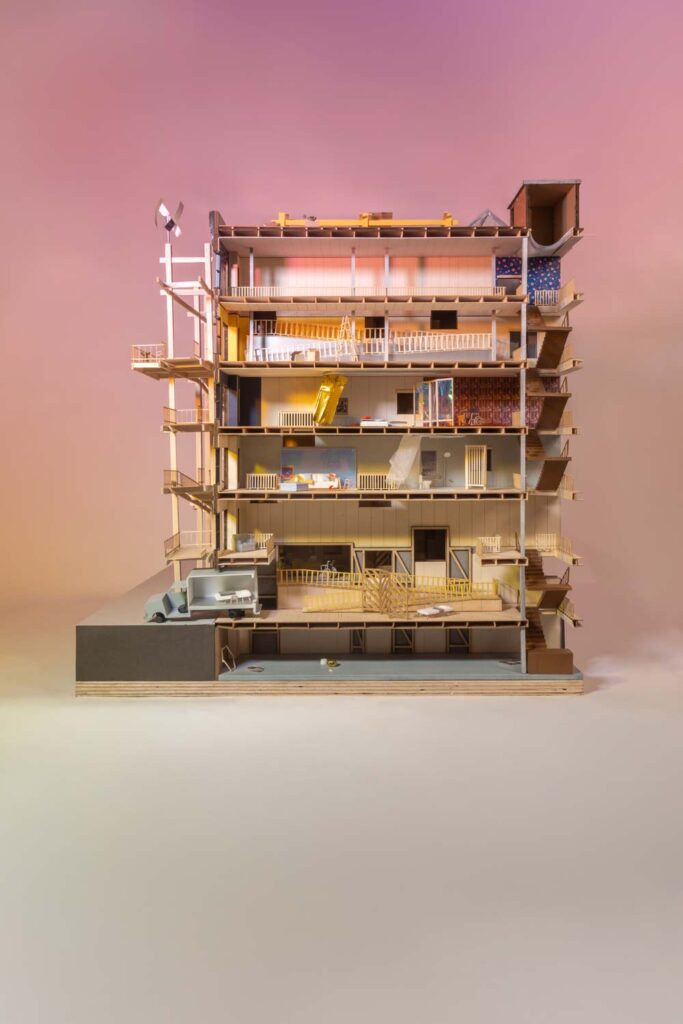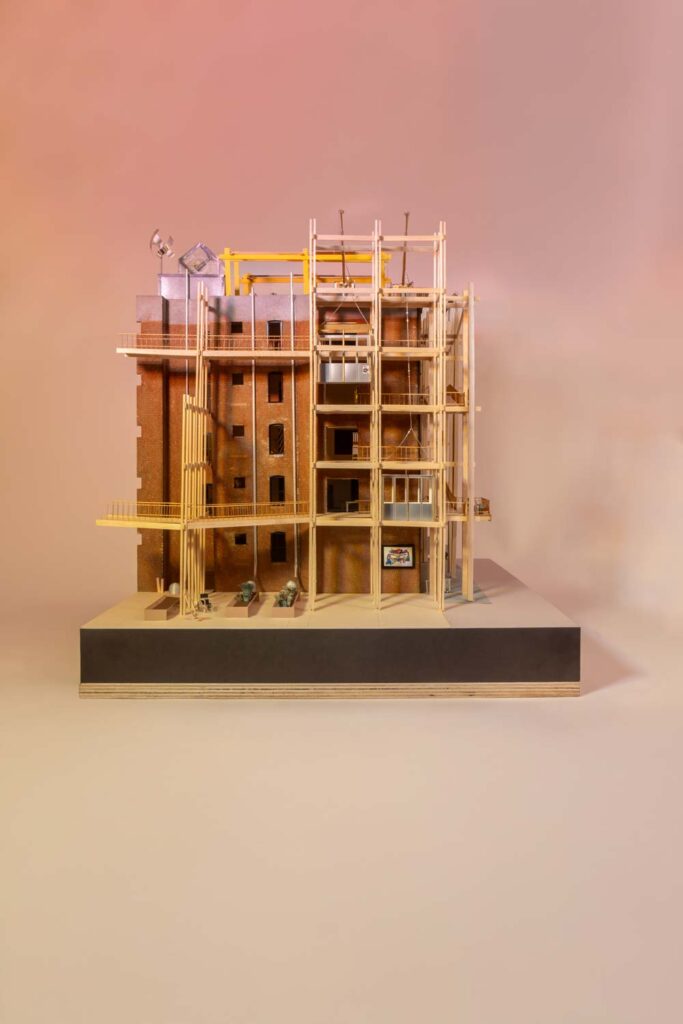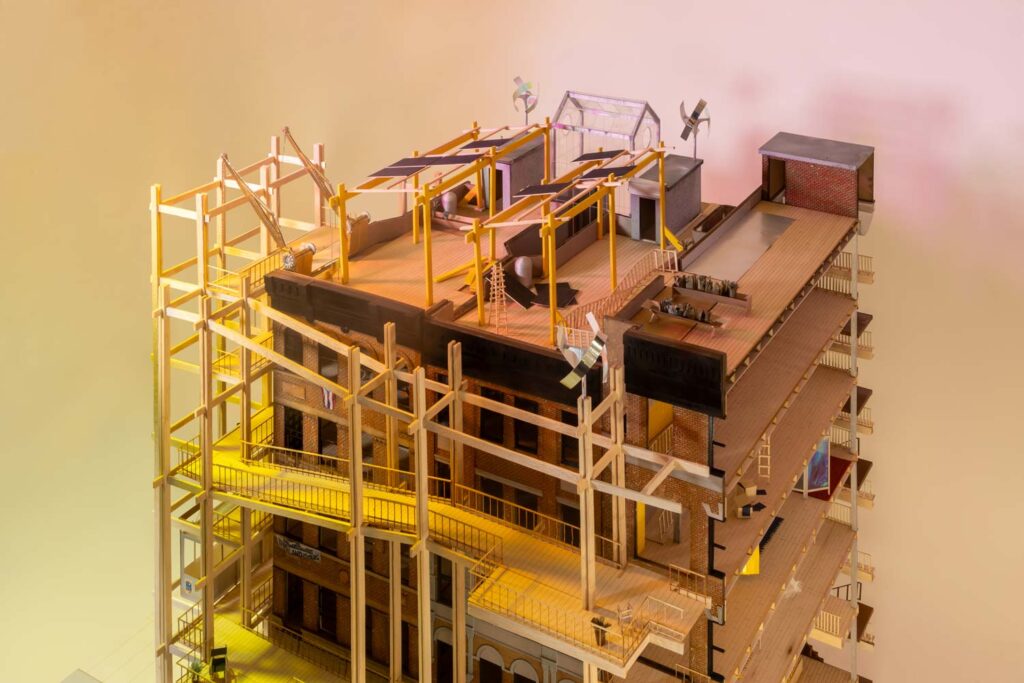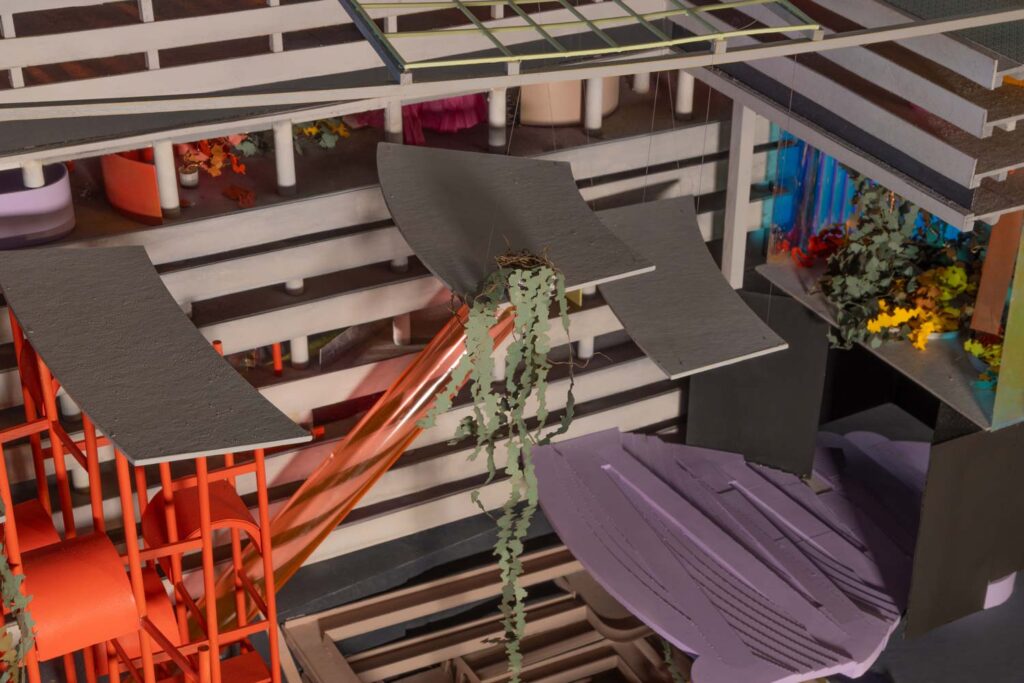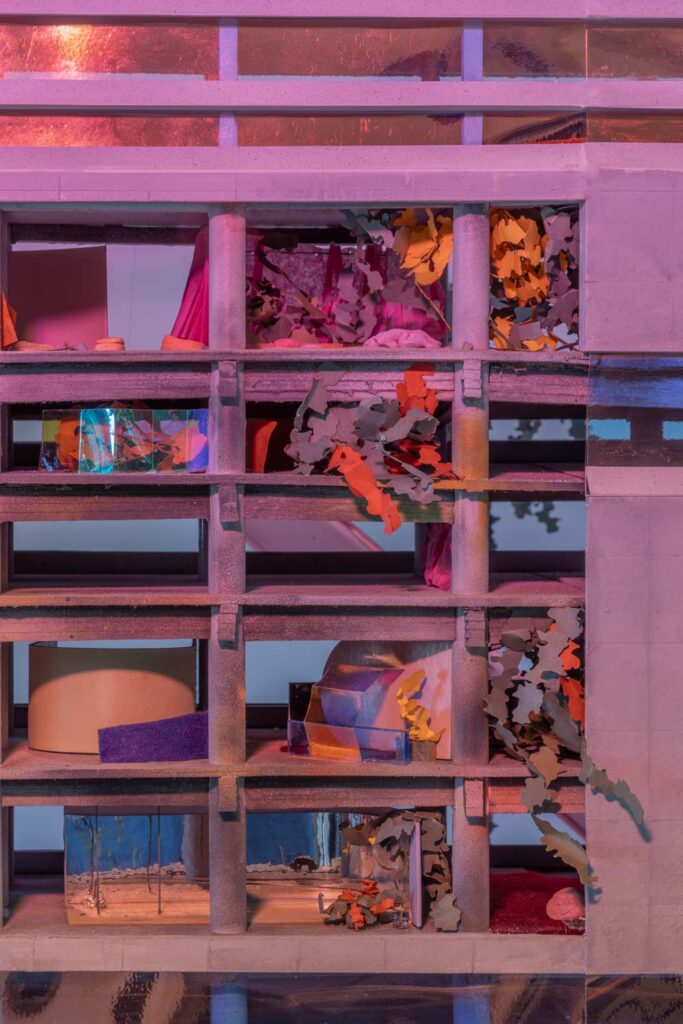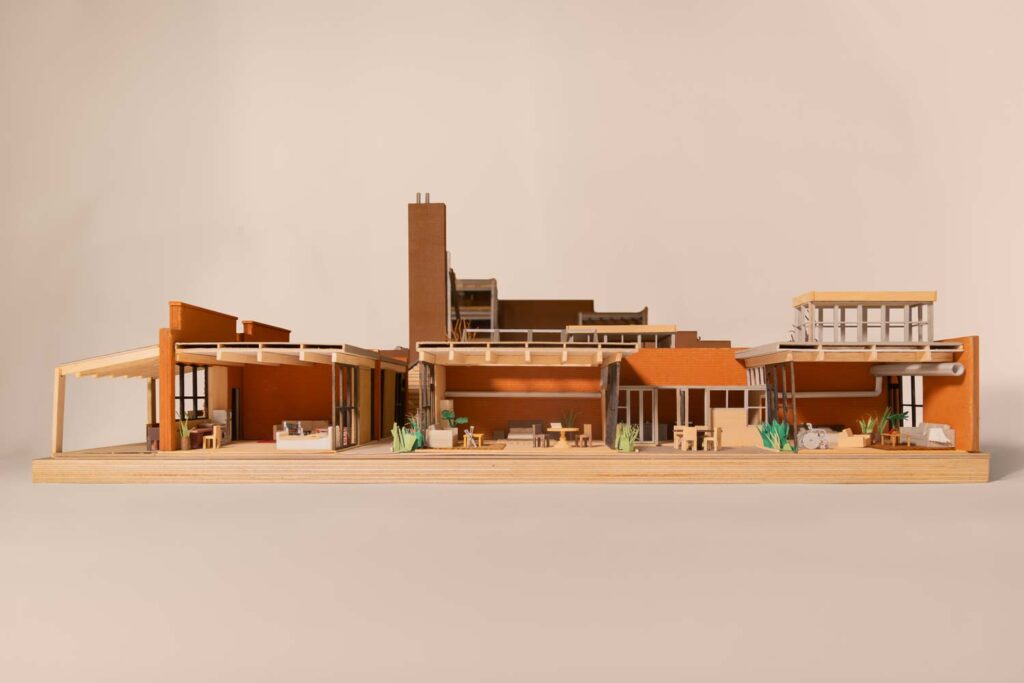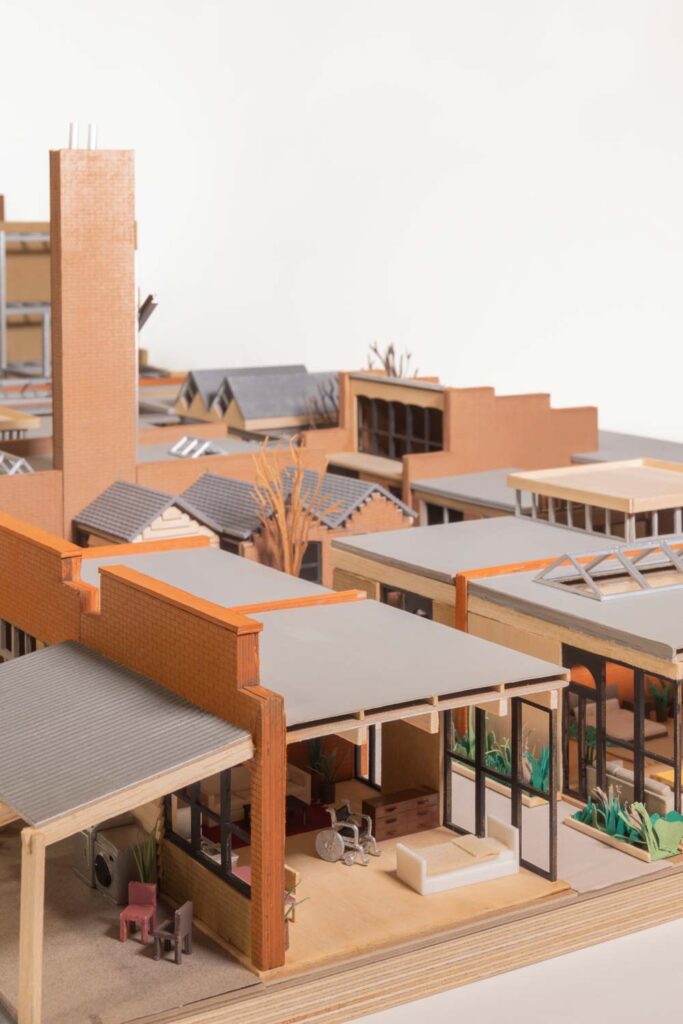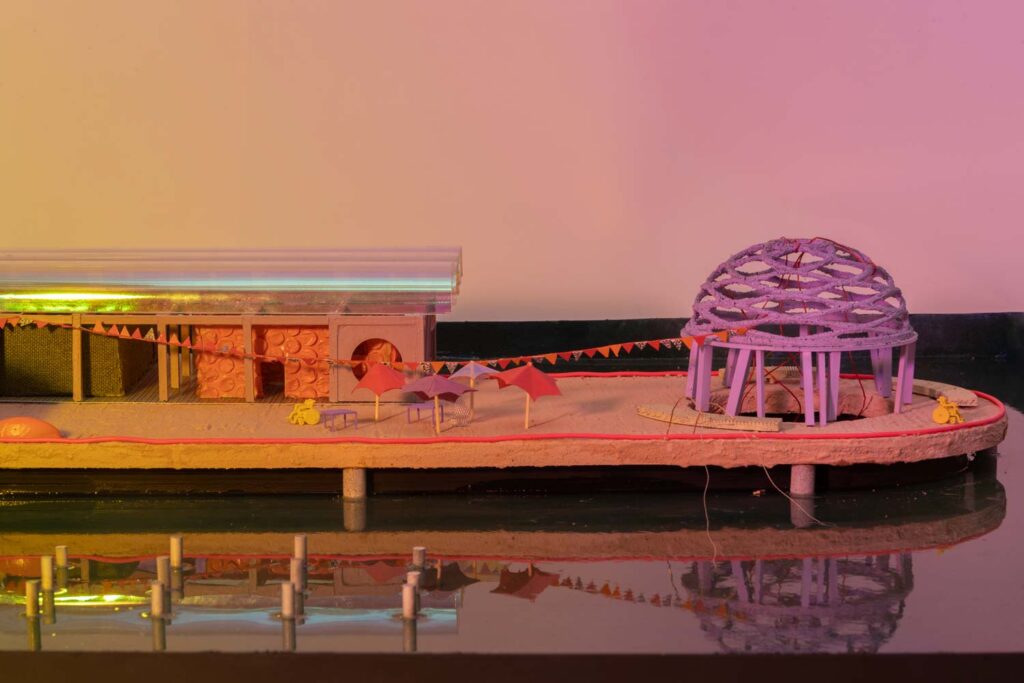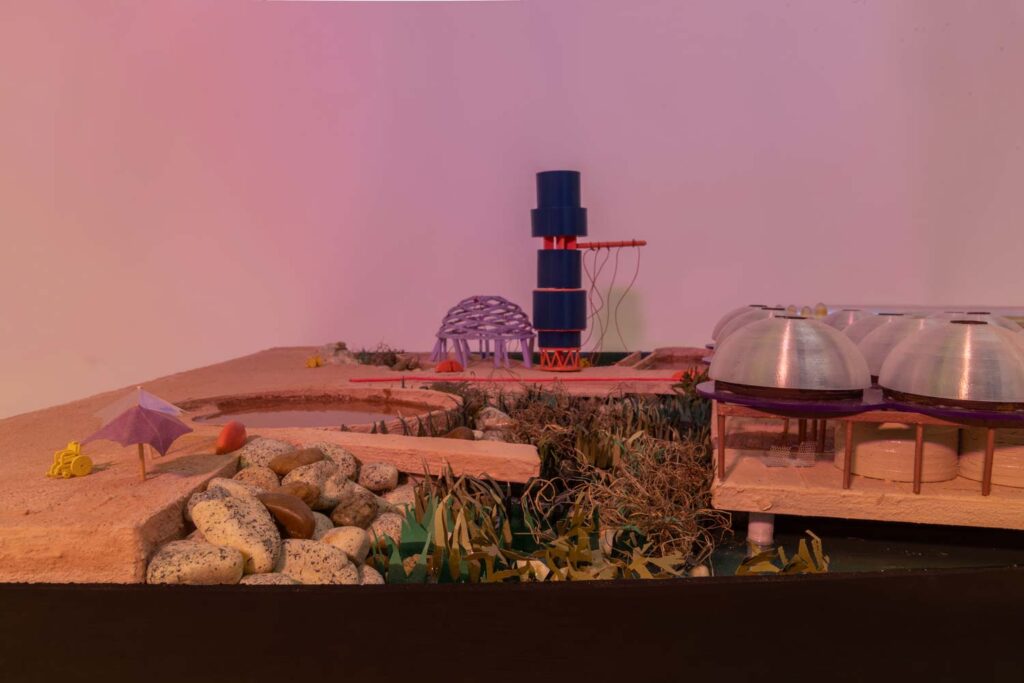
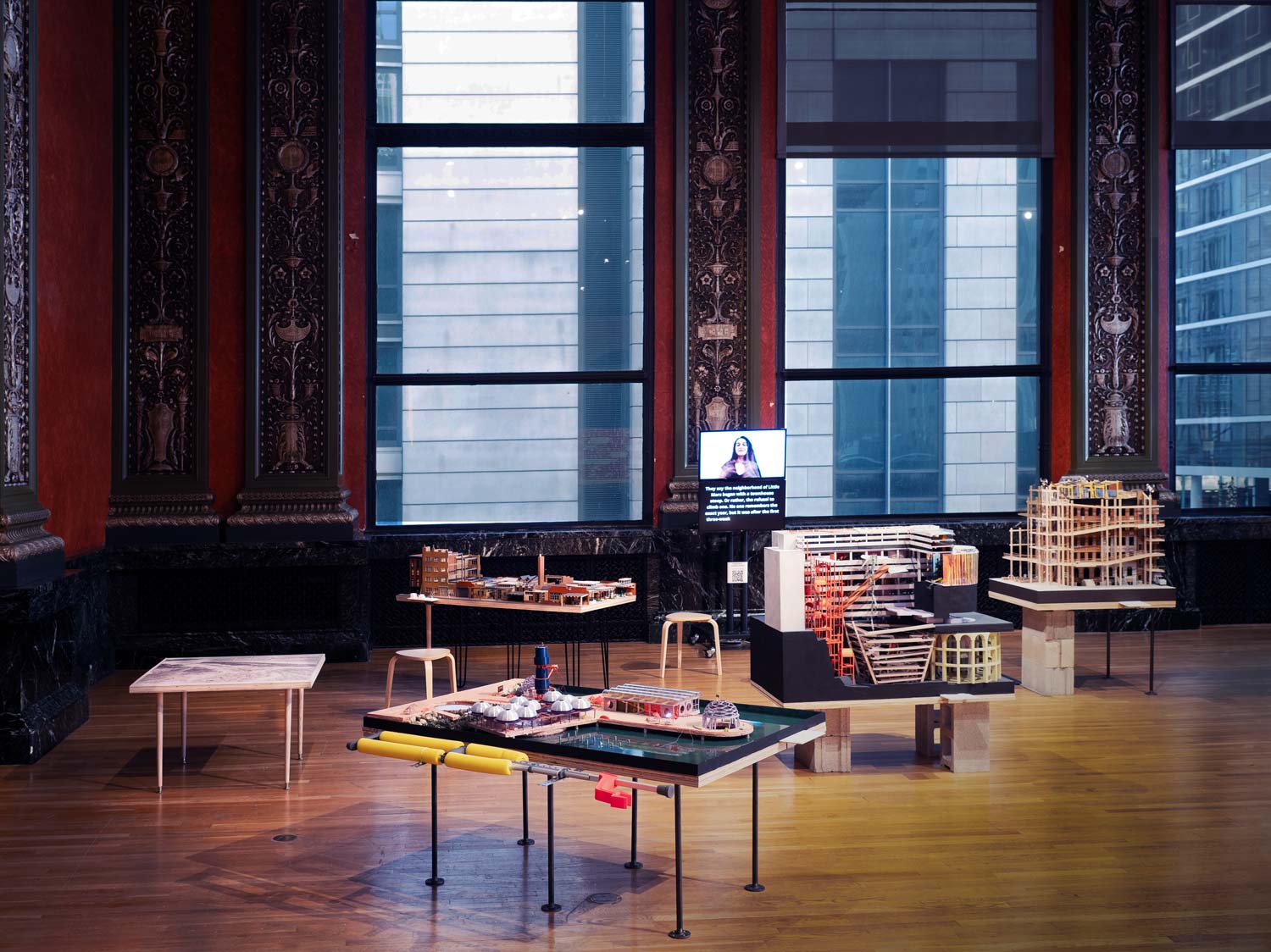
This project reimagines the past and future of our built and natural environments by centering the perspectives of disabled people in New York City. It depicts worlds in which disabled cultures manifest themselves—illustrating their flourishing, struggles, negotiations, and fights. It crafts alternative visions of our shared histories and contested futures, which have too often been shaped by ableism and eugenics. It adds imaginations that challenge those of architects and designers who depict the elimination of our impairments, the normalization of differences, and the techno-utopian assimilation and pacification of all disabled people.
Presented as a discontinuous description of a fictional disability world mixing different scales and times, Fragments of Disability Fictions highlights how disability and impairment offer alternatives to conventional representations of the past and future. The installation’s fragmentary character also disrupts the connection between the crafting of physical models and the pursuit of totalizing forms of control that produce “model” (ie. “ideal”), streamlined worlds. The latter are often ableist (if not eugenic) representations of life. Unlike many visions of urban health and well-being, the architectural and urban histories we explore include messier, more complex, and more inclusive embodiments, materialities, cultures, socialities, technologies, and ecologies. Developed with the guidance of a group of disabled scholars, activists, and policy makers, such histories conceptualize physical and emotional well-being in complementary, contrasting, and even contradictory ways.