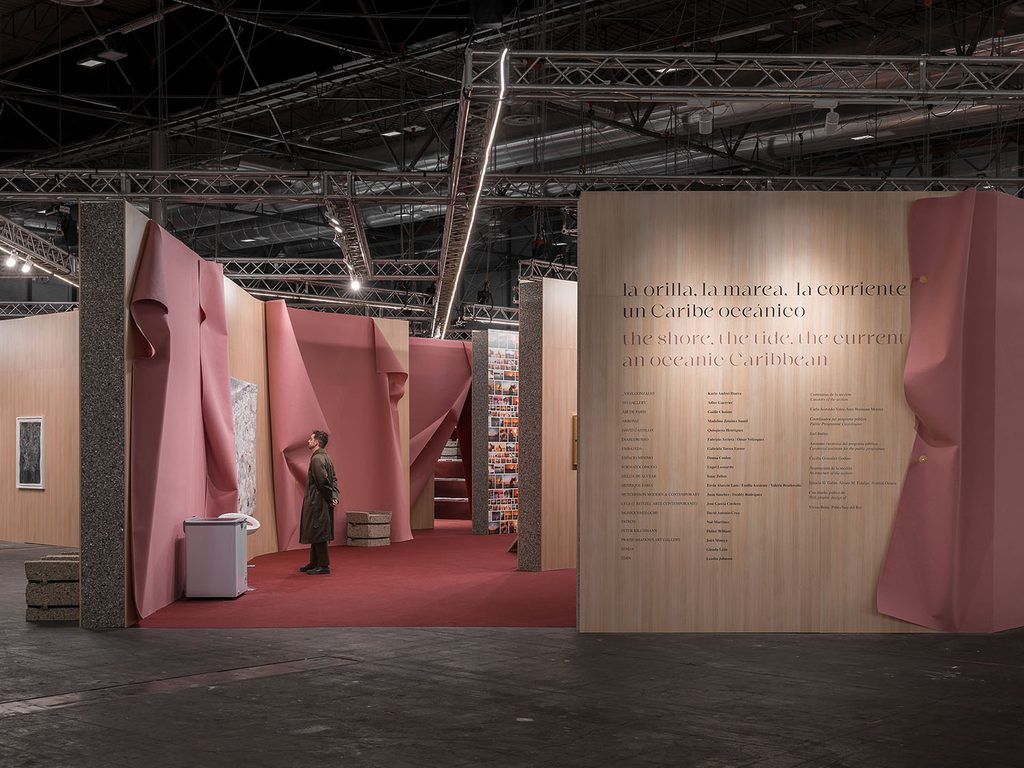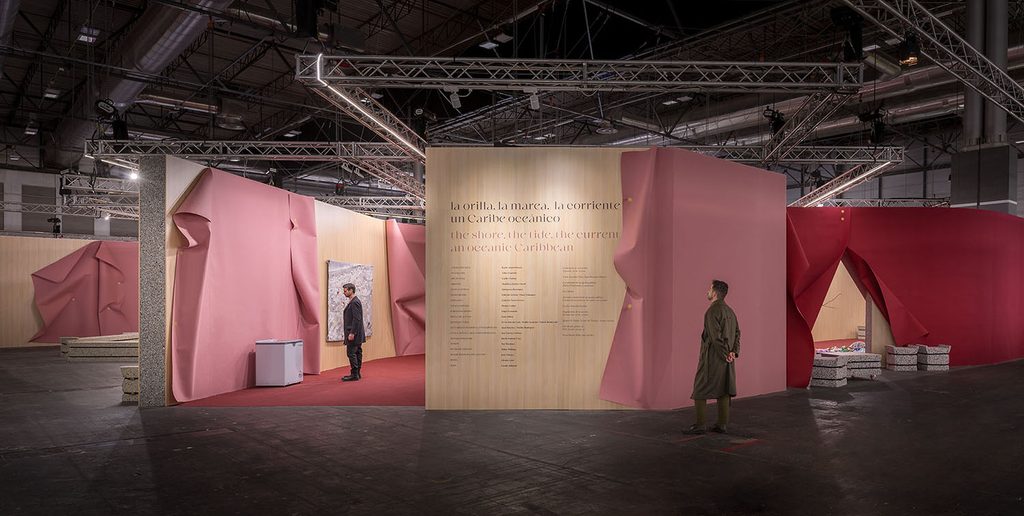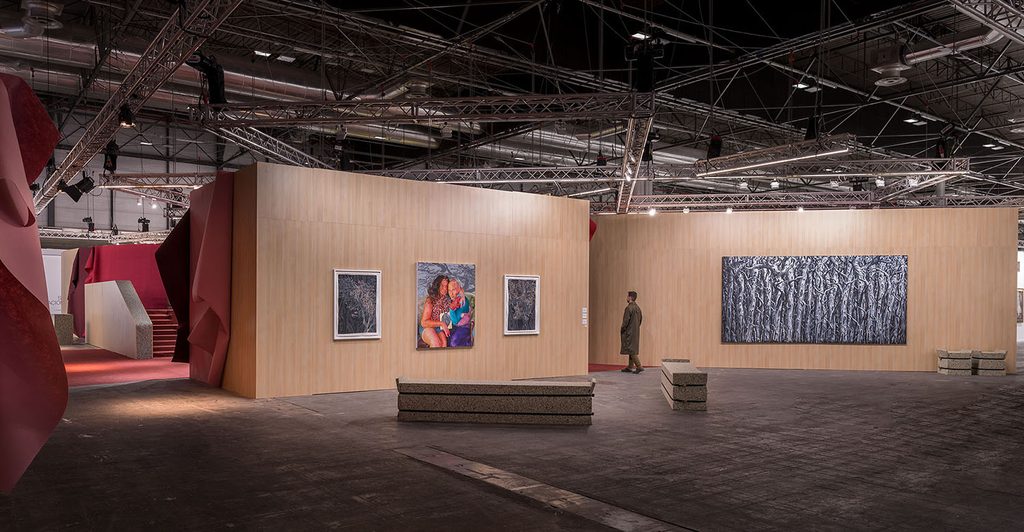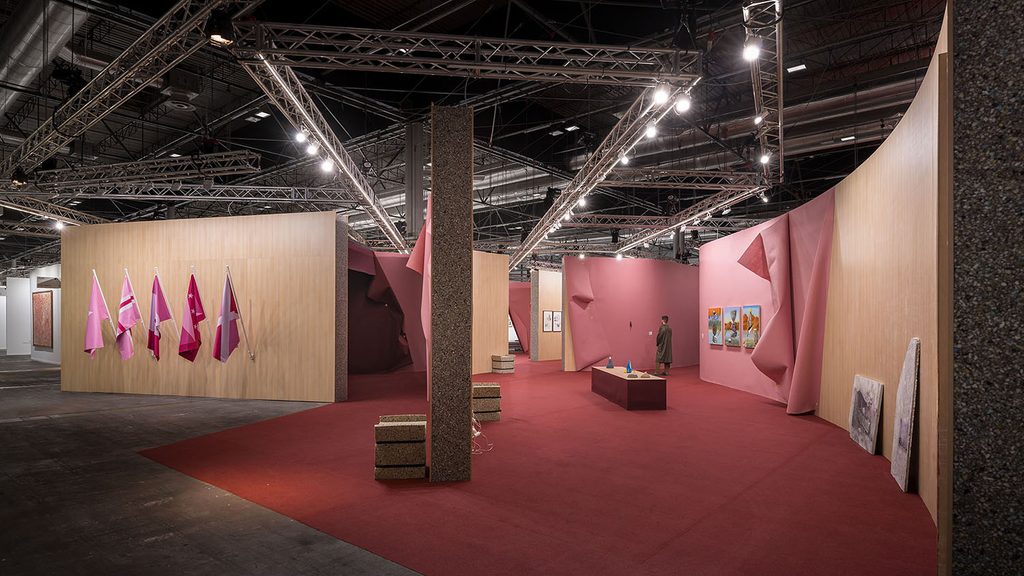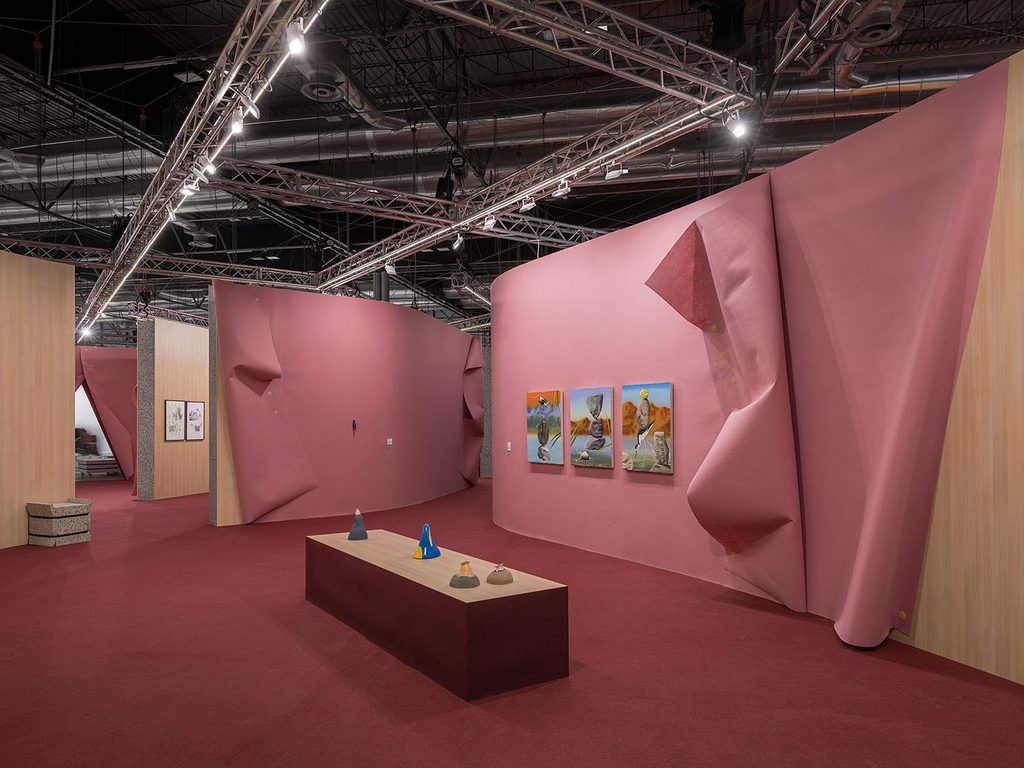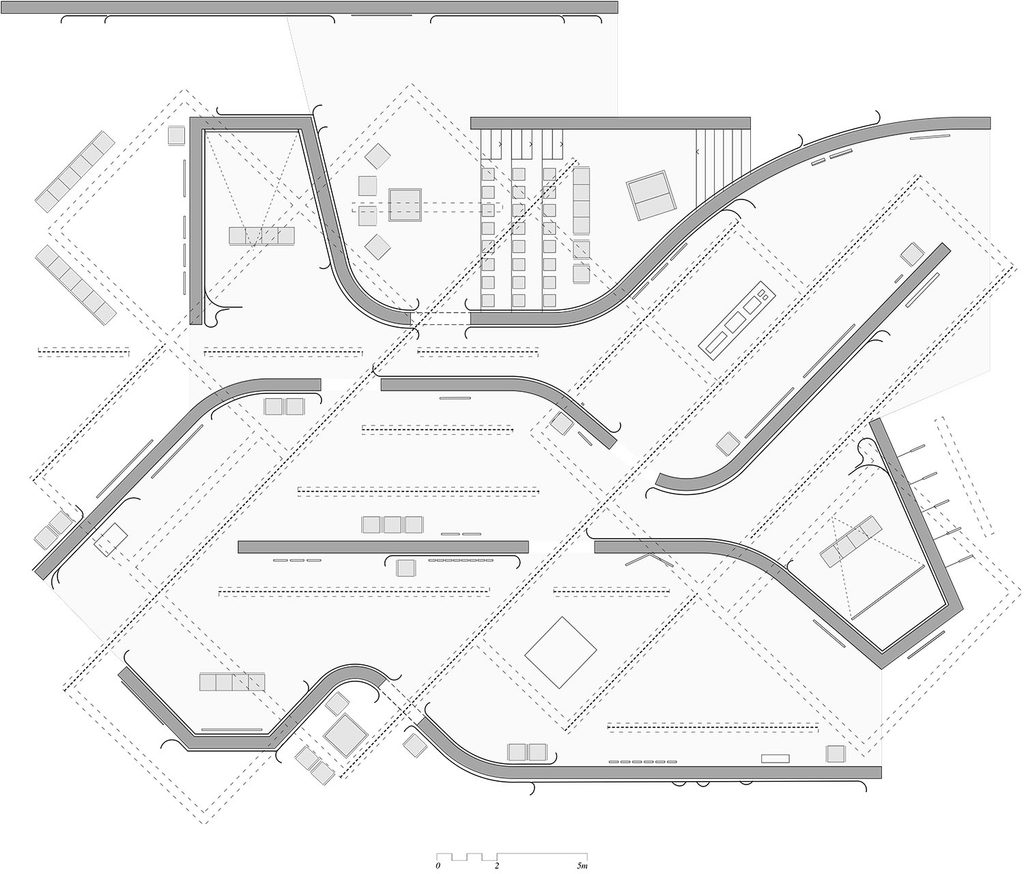
The architectural proposal for the exhibition «The Shore, the Tide, the Current: An Oceanic Caribbean» materializes the conceptual framework of the curatorial proposal in dialogue with the works of 23 artists from 19 galleries included in the 800sqm of the show, and includes a forum for events and conversations. The curatorial text by curators Carla Acevedo-Yates and Sara Hermann Morera presents a relational vision of the Caribbean: «The Caribbean is not a sea, it is oceanic. Approaching the Caribbean as such implies refuting its insular, fragmented and disconnected condition in order to approach its continental and reticular dimension. Its ocean currents flow into the Atlantic and other ruptures generated by our species connected it inextricably to the Pacific. This continental status of the Caribbean highlights the colonial relationships between the archipelagos and the continents, the trade winds that facilitated colonial expansion, and the overlaid and underground currents that facilitate human and non-human movement.»
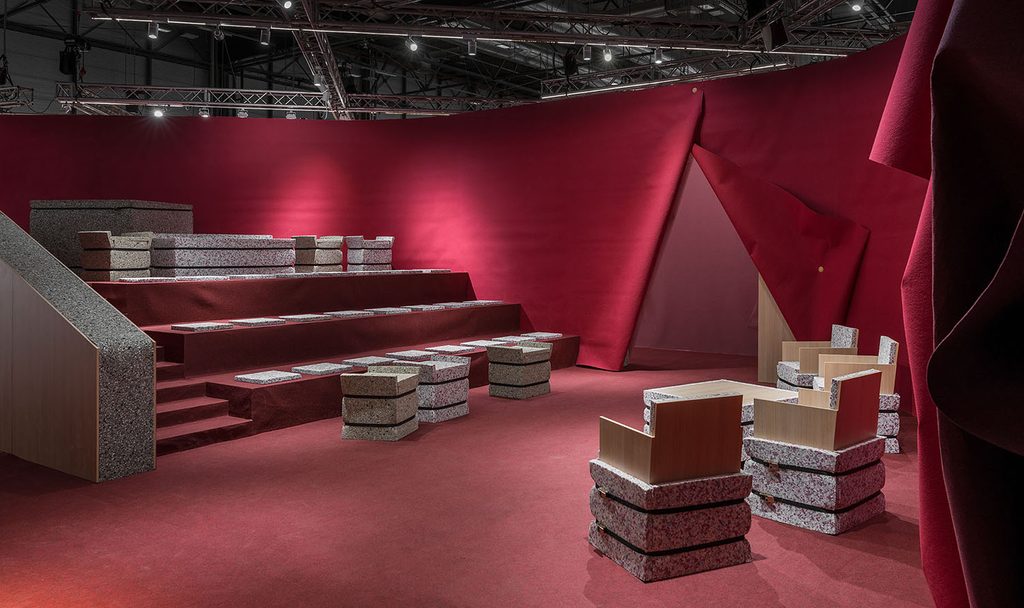
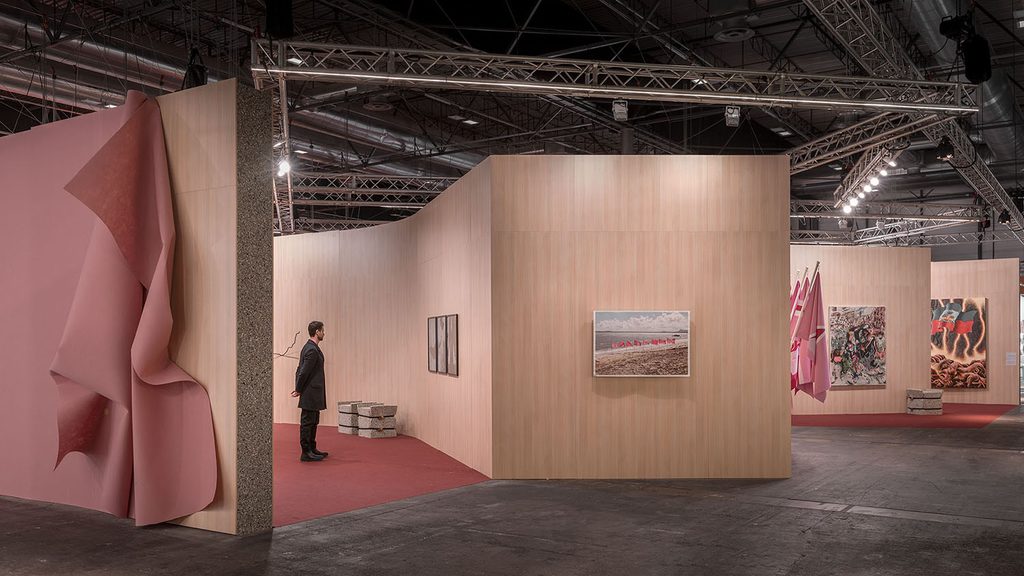
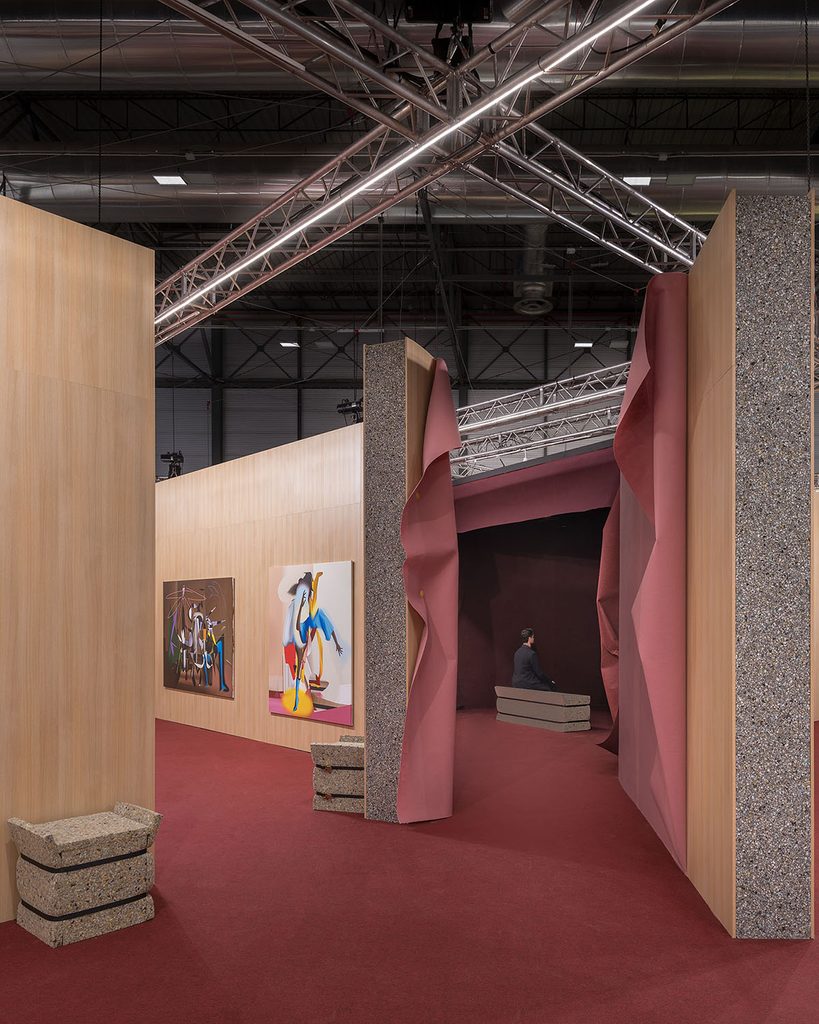
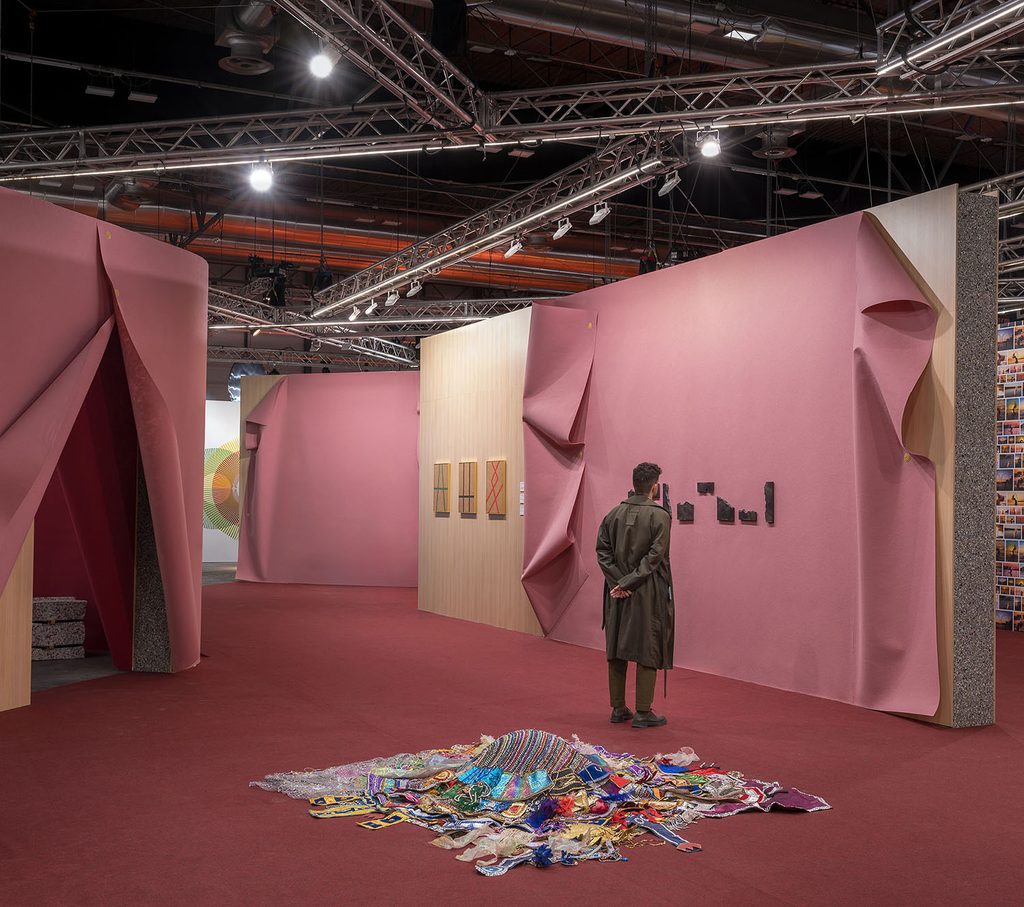
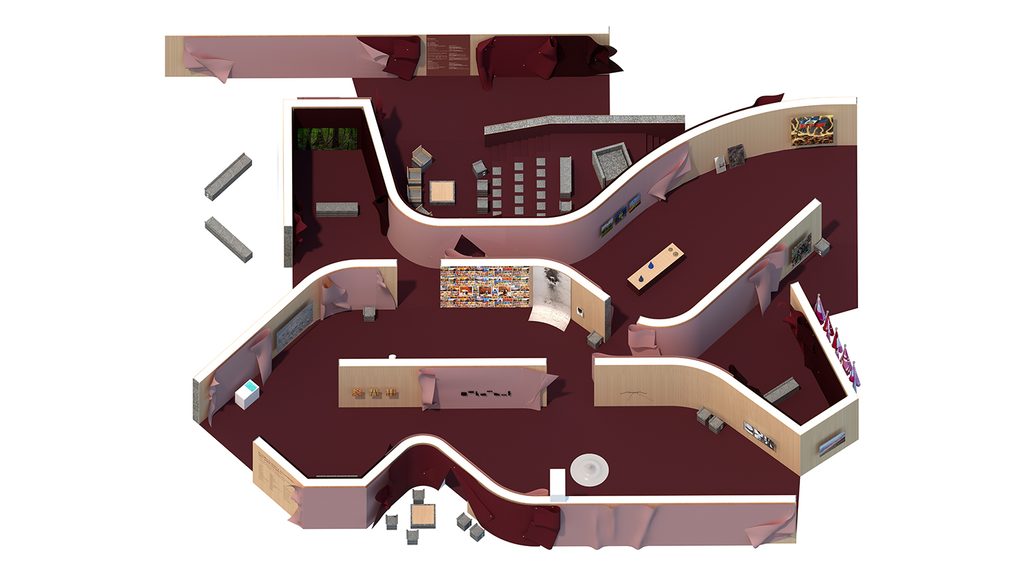
The architecture of the section presents, on the one hand, the flows, encounters, and confluences, and on the other, the cuts, distances, and dismemberments that configure this territory. The design translates this heterogeneous reading of the overlapping contexts found in the Caribbean through spaces that expand and compress in a floor plan configured through walls that combine rigid and undulating geometries. This spatial sequence defines conversations between the works on display and opens up to the space of the fair while defining enveloping spaces for projections and the forum. Superimposed to these geometries, a sort of nautical chart made up of fair trusses with lighting lines guide the visitor through the narrative sequence of the exhibition while marking crossed visions and diagonal circulations that emphasize the relational spatial vision of the curators.
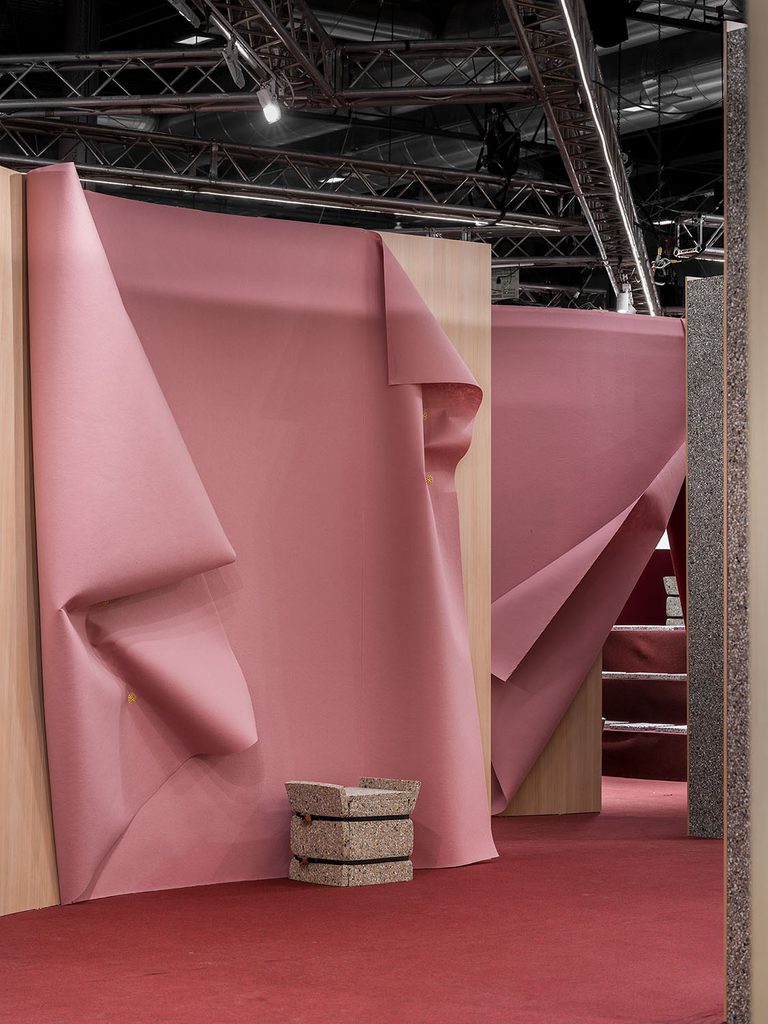
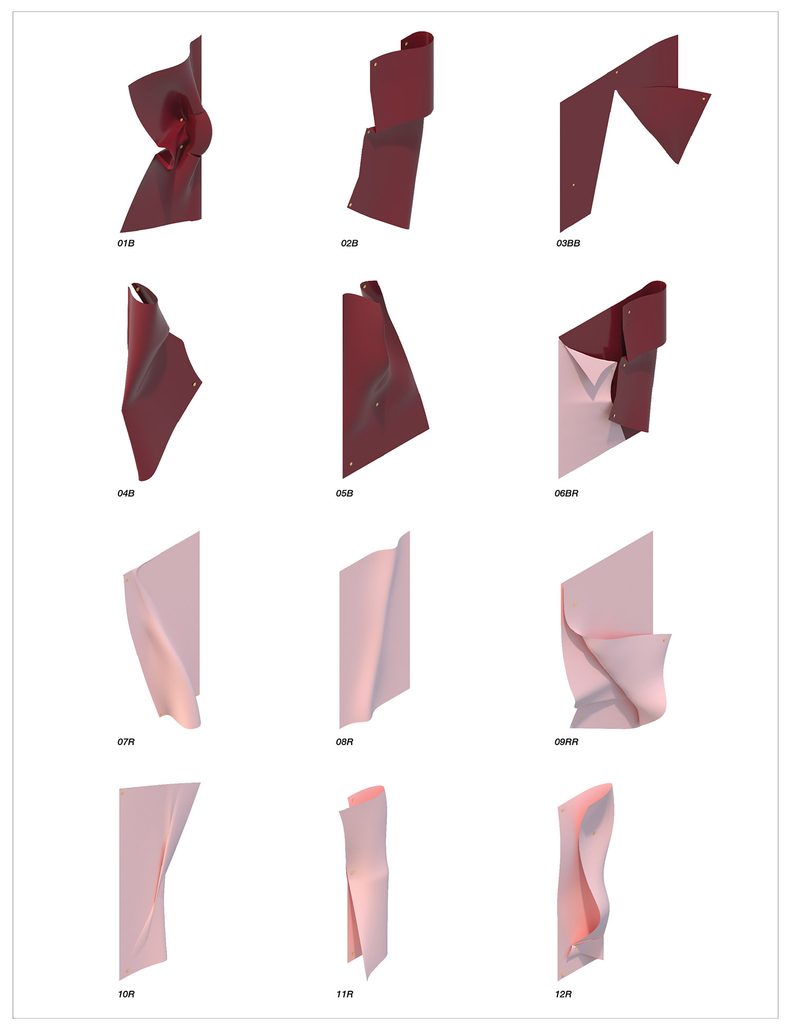
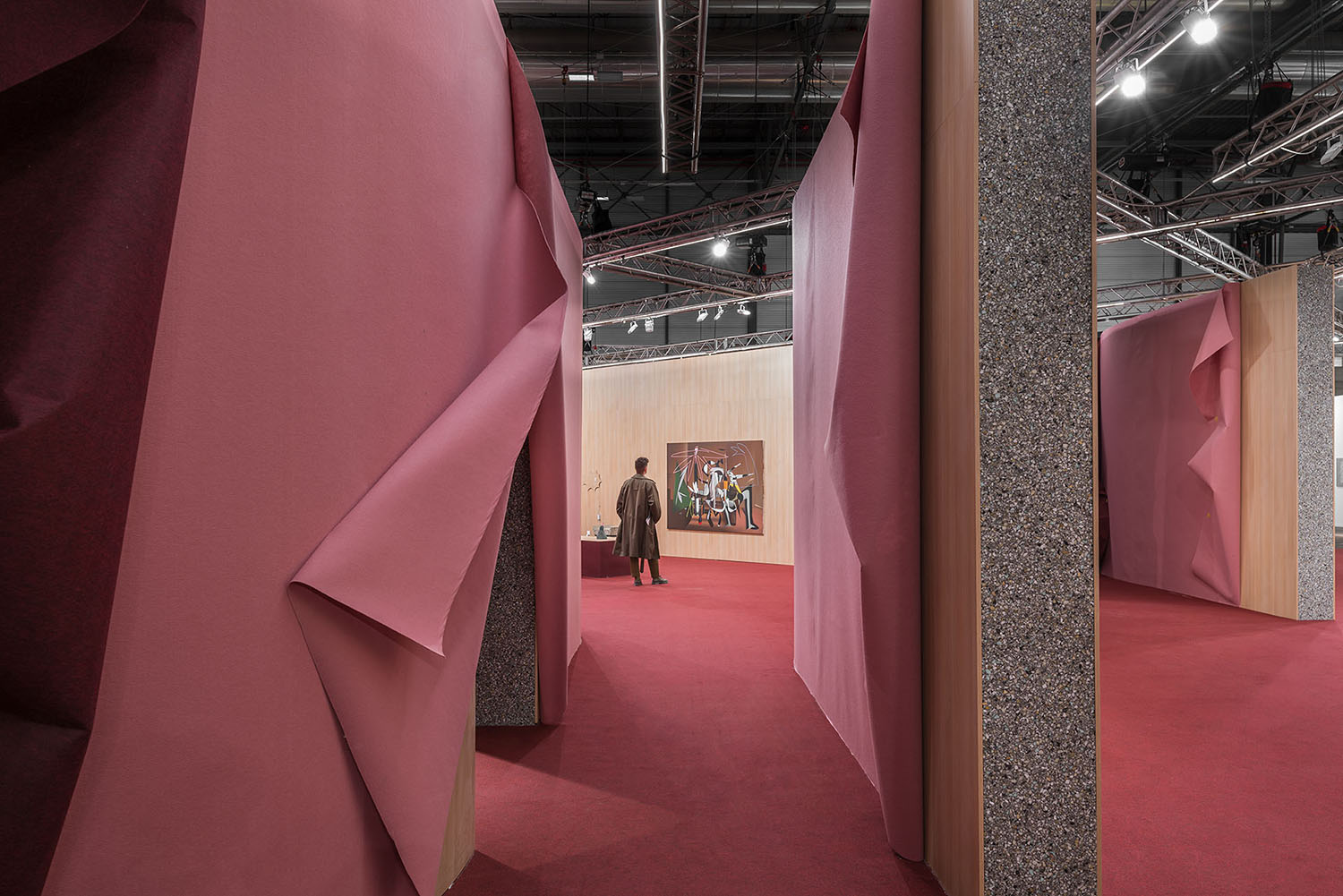
The architectural proposal also mobilizes decisively the materiality of the exhibition space, which is configured through walls panelized with wood and partially lined with fairground carpeting by means of surfaces that cut, fold, and twist. Far from defining a stable representation and a unitary reading, these surfaces construct spaces that the curators describe as «ungraspable, showing vulnerability and precariousness.» The pink colors of the carpeting and a family of furniture lined with fluffy but stone-looking recycled acoustic insulation foam question the clichés disseminated in the representation of the Caribbean and contribute to the questioning of this territory that the exhibition proposes.